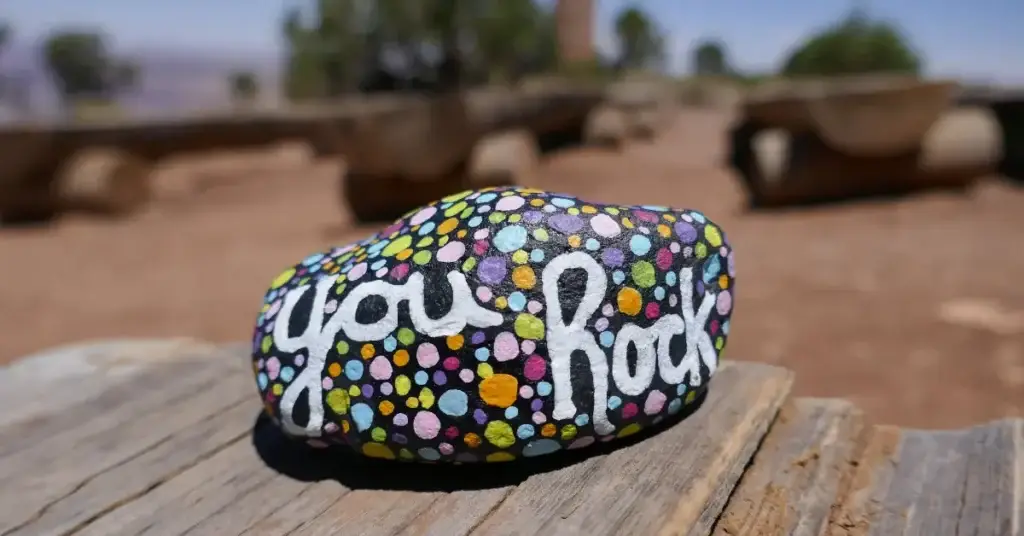
There is something deeply satisfying about taking a literal piece of the earth and turning it into a vibrant, colorful work of art. Whether you’re looking to spread kindness to your local community, want to spruce up your garden, or are just looking for a budget-friendly craft, rock painting is the ultimate creative escape.
It may seem pretty straight-forward, and it is, but there are a couple of important things to consider. You want to use a paint that will stick well, not chip or peel off, and is non-toxic. You will also need to know how to seal it and protect it from the elements without hurting nature or wildlife.
The good news is you do not need to be a master artist or break the bank to get gorgeous, professional-looking results. In this ultimate step-by-step guide to rock painting, we’re breaking down the entire process. So, grab a paintbrush, find a comfortable workspace, and let’s turn some ordinary stones into something extraordinary!
Every great masterpiece needs a solid canvas, and in the world of rock painting, your canvas literally comes from the earth. But before you head out the door with a bucket, it’s important to know that not all stones are created equal. Finding the perfect rock makes the painting process smoother, easier, and a lot more fun.
Here is everything you need to know about tracking down the ultimate canvas for your next project.
When you’re browsing for rocks, you want to keep a few specific traits in mind. The ideal painting rock is:
Smooth and Flat: Look for stones that have been naturally tumbled and flattened. Rough, jagged, or heavily pitted rocks will chew up your paintbrushes and make fine details nearly impossible.
Fine-Grained: Smooth river rocks or capstones are perfect because the grain is tight, meaning they won’t absorb all your paint like a sponge.
Ideally you would go to a naturally rocky riverbed to gather your rocks, but I don’t believe there is such a place near Belleview! But don’t worry, you don’t need a natural geological wonder in your backyard to find incredible stones. In fact, buying your rocks in bulk is often the best way to get a uniform, clean batch of perfect canvases.
Here are the best places to look:
Check out the garden center or landscaping aisles at Lowe’s (see: Beach Pebble Company Multicolor Decorative Rocks) or your local Ace Hardware. They frequently sell large bags of “river pebbles” or landscaping stones. This is a great budget option, just be prepared to sort through the bag to find the right shapes and sizes.
If you want guaranteed smoothness and perfect shapes without the dirt, head over to Michaels. They sell bags of pristine white or gray river stones specifically sorted for crafters. You can also pop into Walmart in the craft aisle for small, pre-sorted packs of smooth crafting stones. They are not the most economical choice when compared to buying in bulk but you can use all the ones you get and they are pre-prepped! These are the ones I use: Hello Hobby Natural Smooth Rocks, Set of 6.
If you want the perfect rocks delivered straight to your porch, Amazon is a goldmine for rock painters. You can find highly rated, hand-selected, ultra-smooth river rocks that are already washed and ready to go. Grab a small bag of ten 2-3″ river rocks to get started or a bag of 25 river rocks (up to 5″) to stock up!
If you do decide to go hunting for your own rocks while exploring the great outdoors, there is one critical rule to live by: Leave no trace, and take only what is permitted.
It can be incredibly tempting to pocket a smooth stone while visiting beautiful local parks, natural springs (like Silver Springs over in Ocala), state parks, or coastal beaches. However, removing rocks from protected public lands, state parks, and conservation areas is actually illegal and can disrupt fragile local ecosystems.
Always stick to public spaces where foraging is explicitly allowed, or better yet, stick to private property where you have direct permission from the owner. When in doubt, grabbing a bag from the store ensures your conscience, and your canvas, is completely clear!
If you find your rock outside or in a riverbed, it is essential to prep it before you begin painting. This may also apply to large landscaping bags of rocks.
Step 1: The Scrub: Wash away dirt, mud, and algae with warm soapy water and an old toothbrush.
Step 2: The Dry: Let the rocks dry completely before beginning (trapped moisture ruins the paint later).
Now that you have your stones, it’s time for the fun part: gathering your supplies! Walking down the craft aisle can feel a little overwhelming with all the different types of mediums available, but you don’t need a massive budget to get started.
In fact, some of the most reliable tools are incredibly affordable. No matter what brands you end up choosing, the golden rule of rock painting is to always choose non-toxic supplies. This is especially important if you plan to leave your finished rocks out in nature as decor for others to find.
Here is a look inside my personal rock painting toolkit, featuring the exact supplies I rely on for smooth, vibrant results.
When it comes to coverage and durability, acrylic is king. However, a higher price tag doesn’t always mean a better experience on stone.
Apple Barrel Matte Acrylic Paint: This is my absolute holy grail. It’s ultra-affordable, non-toxic, highly pigmented, and you can easily grab it in the craft aisle at Walmart. The matte finish creates the perfect smooth surface for layering details on top. You can get a set on Amazon for about $1/bottle but if you can get to Walmart, that cost goes down to as little as $0.56/bottle!
The “Multi-Surface” Trap: You might see bottles labeled “multi-surface” or “outdoor” acrylics and think they make perfect sense for rocks. Skip them! In my experience, these formulas take way more coats to look opaque and have a tendency to peel right off the stone like a sheet of plastic. Stick to standard matte paint and let your final sealer do the heavy lifting outside.
Trying to paint tiny details, fine lettering, or crisp outlines with a standard paintbrush can test anyone’s patience. That’s where markers come in.
Acrylic Paint Pens: For general detailing, you want water-based acrylic paint pens. They glide beautifully over a dried acrylic base coat and match the texture perfectly. I personally use this set of 36 Precision Dual-Tip Acrylic Paint Markers from Amazon.
Fine Line Markers (The Sharpie Alternative): Personally, I use a package of specialized fine line markers from Amazon because they give me a much cleaner, sharper line than a standard Sharpie.
⚠️ Crucial Marker Warning: Many fine line markers and traditional permanent markers are alcohol-based. If you use these, they will bleed and smear the second you brush a liquid sealer over them. Don’t panic! You can still use them, but you’ll need a specific technique (using a sponge) when it’s time to seal. Jump down to our sealing section below to see exactly how to prevent the dreaded ink-run.
White Gesso: Gesso is a thick, chalky primer used by traditional canvas painters, but it is a rock painter’s secret weapon. Giving your raw rock a quick coat of white gesso seals the porous stone so it doesn’t just suck up and absorb all your colorful craft paint. It gives your colors a bright, grippy surface to cling to, meaning you’ll use way fewer coats of your actual paint! I recommend Liquitex Basics Gesso Surface Prep Medium.
The Black Paint Exception: The only time you can safely skip the gesso is if your design calls for a solid black background. A good quality black matte acrylic paint usually has incredible coverage and will coat the rock perfectly in just one or two passes.
You don’t need a million brushes, just a few key shapes to handle different parts of the stone.
Base Brushes: You’ll want a flat wash brush (or any larger brush) to quickly apply your background colors, and a dedicated set of synthetic fine detail brushes for line work. I like to pick up a general starter set and a specialized fine detail brush pack.
You can pick these sets up at Michaels (always check their app for sales and coupons!), Walmart, or Amazon. This is the one I use: 24 Pieces Paint Brush on Amazon. It also comes with a sponge, which you will need!
Detail Brushes: You may or may not need a set of detail brushes. Some people will only use paint pens after painting the background. I personally use a mix of both and sometimes, I need finer brushes for finer details. For that, I use the Set of 15 Detail Paint Brushes from Amazon.
If you’ve ever wondered how rock artists paint those absolutely flawless, mesmerizing geometric mandalas or perfectly round eyes on animal designs, here is the secret: they aren’t using paintbrushes.
Instead of buying expensive, specialized “rock dotting kits,” just look for a standard ball-stylus clay tool set on Amazon. These double-sided metal and acrylic rods are meant for sculpting clay, but dipping the round ends straight into your paint allows you to stamps perfect, crisp circles every single time. See: 10pcs Dotting Tool Set on Amazon.
Writing on the back of the rock is essential if you are leaving it for someone else to find. It can also be a good idea if you are making memories or want to sign and date your art.
What you put on the back of your rock is completely up to you. I personally like to write a positive affirmation or message for the finder along with the year, my initials, Belleview Rocks, and belleviewrocks.com; of course these details may be different if you are not in Belleview.
This allows the rock finder to know what year it was made, what group/city made it, and how to post/share the rock they have found (via the web address).
You’ve spent time finding the perfect stone, prepping it, and painting a beautiful design. The absolute last thing you want is to place your new creation out in your garden or along a local walking trail, only to have the first summer rainstorm wash all your hard work away.
Learning how to properly seal your painted rocks is the ultimate secret to making them durable and ready to survive the elements. Let’s dive into how to shield your art so it lasts for years.
Just like your paint, your sealer absolutely must be non-toxic. This is non-negotiable if your rocks are going outside. Rainwater will wash over these rocks, and animals, bugs, or curious kids might touch them. Keeping things eco-friendly ensures you’re spreading joy, not harmful chemicals.
I have tried a lot of different methods, and my absolute favorite product, the one I use personally, is Liquitex Professional Varnish.
It is water-based, non-toxic, and goes on incredibly smooth. I personally prefer the Satin finish because it gives a gorgeous, soft sheen without being blindingly shiny, but it also comes in Matte, Gloss, and High Gloss if you want that ultra-reflective look.
When you look for sealers, you’ll generally find two formats: brush-on liquids and aerosol spray cans. I do not recommend spray sealers. While you can find low-odor, water-based spray varnishes (like the Liquitex Professional Spray Varnish), a truly 100% non-toxic aerosol spray doesn’t really exist because of the chemical propellants used in spray cans. If you want a completely toxic-free process from start to finish, stick with a liquid brush-on sealers!
Mod Podge vs Liquitex: Mod Podge does work as a sealer, however can become sticky over time. Certain formulas can also yellow. For this reason, I use Liquitex.
Remember those fine-line alcohol markers or permanent markers we talked about in the supply list? If you take a paintbrush loaded with liquid sealer and drag it directly across that ink, it will smear and blur your crisp lines.
Here is the fix: Take that small foam craft sponge from your brush kit and dip it into a little bit of your Liquitex varnish. Instead of brushing or wiping it across the rock, gently press the sponge over the marker lines. This deposits a thin, protective layer of sealer without any friction. Let that dabbed layer dry completely for an hour, and then you can safely brush a second coat over the entire rock without a single smear!
One layer of Liquitex is fine but if you want to add a second layer, wait at least 24 hours.
If there is one step that trips up eager crafters, it’s rushing the drying process. Patience is your best friend here!
Before Sealing (Wait 24 Hours): Even if your acrylic paint feels totally dry to the touch after an hour, it is still chemically “curing” and releasing trapped moisture. Let your painted rocks sit for a full 24 hours before you apply any sealer. If you seal them too early, that moisture gets trapped underneath, which causes the sealer to turn cloudy or peel right off later.
Before Going Outside (Wait 24–48 Hours): Once your final coat of sealer is on, let it cure indoors in a dry area for at least a day or two before placing it outside in the weather.
Once that sealer is fully cured, your rock is officially weather-proofed and ready to handle the Florida humidity, rain, and sunshine!
The Culprit: Usually, this happens because a step was skipped during the prep work, or moisture got trapped under the surface. If a rock isn’t washed properly, the paint clings to the invisible layer of dirt or algae instead of the stone itself. Alternatively, using thick “multi-surface” or outdoor gloss paints can create a plastic-like layer that easily peels away.
The Fix: Make sure to give your raw rocks a good scrub with warm, soapy water and let them dry completely in the sun before painting. Don’t forget your secret weapon: a solid base coat of white gesso gives your paint a textured, grippy surface to lock onto so it stays put for good.
The Culprit: Friction and chemistry. If you are using a permanent marker or an alcohol-based fine-line pen for details, dragging a wet paintbrush loaded with liquid sealer directly over it will dissolve the ink and drag it across your rock.
The Fix: Don’t brush—dab! Take a small foam craft sponge, dip it into your Liquitex varnish, and gently press or blot it over your line work. This deposits a protective barrier without any rubbing friction. Once that dabbed layer dries for an hour, you can safely brush on your second coat normally.
The Culprit: An accidental smudge, a shaky line, or a color combination that just isn’t working out.
The Fix: Absolutely not! One of the absolute best things about acrylic paint is how forgiving it is. You don’t need to wash anything off. Just let the mistake dry completely (if you try to fix it while it’s wet, you’ll just create mud). Once it’s dry, grab a bit of your white gesso or background paint, cover up the error, let that dry, and paint right over it. It’s like it never even happened.
The Culprit: This usually happens if the sealer was applied too thick, if a second coat was added before the first coat was fully dry, or if the humidity is incredibly high (hello, Florida summers!). This is also known to happen when using Mod Podge.
The Fix: Bring the rock inside into a cool, air-conditioned room with a fan running to help it cure. It might take a few extra days to fully lose that tackiness if the layers are thick. In the future, remember that two ultra-thin coats of sealer are always better than one thick, heavy layer! Also, use Liquitex instead of Mod Podge.
The Fix: Don’t worry! It is definitely not too late. Let the seal dry for at least an hour and then go ahead and write on the back as usual. Wait 24 hours for the paint to cure, then add a second layer of seal and you are good to go!
Find a little magic in Belleview. Join our community project to hide, find, and share painted treasures throughout our town.
© 2026 Belleview Rocks – Created by Kat Ohren